Folio Society Published Works Number 2228
Keen, Maurice - Chivalry
We buy and sell items like these, so please contact us if you have similar items for sale, and we will make you an offer if we are interested.
To check if we have this item, or similar items, in stock, please click the Check Stock link below. Alternatively, use the links on the left to search our large online database of items for sale, or to visit the rest of the site.
Check Stock
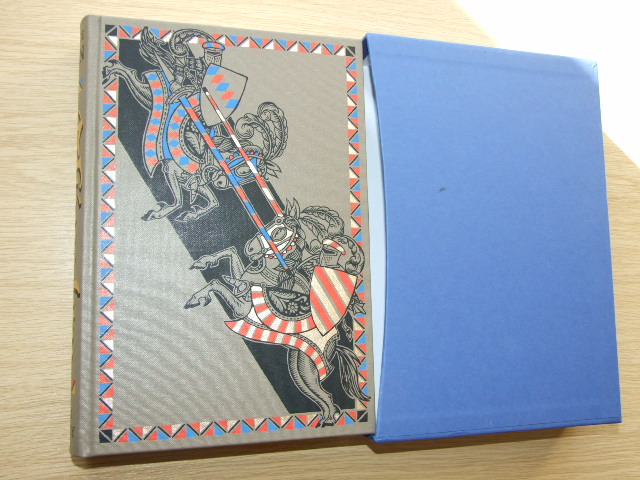
Keen, Maurice - Chivalry (Published in by The Folio Society in 2010. Bound in buckram, blocked with an illustration by Neil Gower. Set in Poliphilus. Approx. 432 pages; frontispiece and 24 pages of colour and black & white plates. Size: 10 × 6.75 ins. With a new preface by the author. They drank their good wines freely, and all the talk was of arms and of love, of hounds and hawks and of tournaments.' This 15th-century description of the Castle of Favel in France conjures up the essence of chivalry: a glittering tableau of knights in shining armour, heroic feats, fair ladies, feasting and jousting. But what did chivalry mean to the fighting men of the medieval era? This award-winning work illuminates the historical reality of the ideal that gripped Europe between 1100 and 1500. The origins of chivalry can be traced back to technical advances that made cavalry more important in warfare, and a new social mobility that allowed young knights to hire themselves out to landowning lords. Keen also examines the rich heritage of chivalric literature, from the 12th-century troubadours and the Grail legend to the stories of Arthur and the Knights of the Round Table, and shows how these tales both influenced and reflected the nature of knighthood. Drawing on military and family histories, contemporary accounts and handbooks for the aspiring knight, the vivid narrative reveals the significance of dubbing, heraldry, tournaments and pageantry, as well as the close but conflicted relationship between chivalry and Christianity. We meet figures like William, Lord of Hemricourt, who almost lost his great fortune through his love of tournaments, and Jorg von Ehingen, who defeated a Saracen champion in single combat at the siege of Ceuta in 1456. Their stories remind us that chivalry was a genuine phenomenon and that 'those who were remembered as the flower of knighthood earned their name and fame hard, in face of real and ugly dangers'. From the Crusades and the Knights Templar to courtly love and the battles of Agincourt and Crécy, this is a brilliant and comprehensive account of the heyday of chivalry. )