Folio Society Published Works Number 2235
Kafka, Franz - Metamorphosis and Other Stories
We buy and sell items like these, so please contact us if you have similar items for sale, and we will make you an offer if we are interested.
To check if we have this item, or similar items, in stock, please click the Check Stock link below. Alternatively, use the links on the left to search our large online database of items for sale, or to visit the rest of the site.
Check Stock
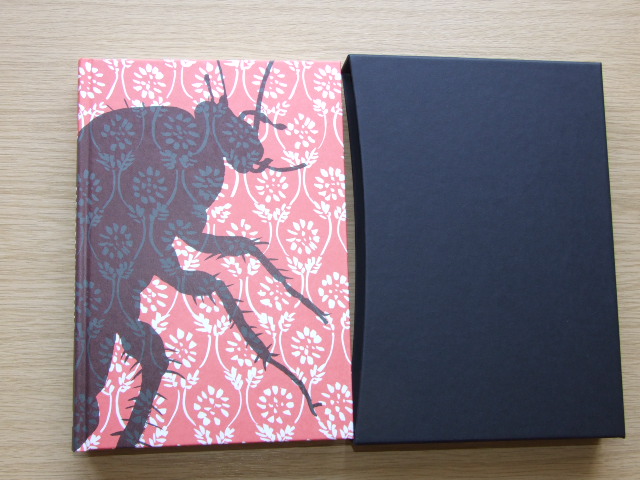
Kafka, Franz - Metamorphosis and Other Stories (Published in by The Folio Society in 2010. Introduced by Will Self. Illustrated by Bill Bragg. 42 stories. Translated by Michael Hofmann. Bound in paper printed with a design by Bill Bragg. No author produces a more claustrophobic, unsettling and exhilarating literary effect than Franz Kafka. In 'Metamorphosis', one of the most memorable short stories ever written, he treads an extraordinary tightrope between the surreal and the prosaic. When the young salesman Gregor Samsa awakes to find himself transformed into a giant cockroach, his first confused thoughts are that he will be late for work: 'The next train left at seven; to catch it meant hurrying like a madman, and his samples weren't yet packed, and he himself didn't feel exactly agile or vigorous.' The hapless Gregor was previously his family's financial support: will they still love him in his monstrous new form? The scenario of 'Metamorphosis' is nightmarish, yet it is filled with unexpected humour and pathos: a powerful examination of family, love, isolation and identity. The other stories are equally disturbing and arresting, filled with breathtaking twists and reversals. In 'The Judgement' – written in a single night of feverish inspiration – a successful young man, Georg, writes to a friend living abroad who seems to have lost his way in life. But does this friend really exist, and why does Georg's father react so violently to the mention of him? Shorter vignettes – 'The Plight of the Bachelor'; 'The Businessman'; 'The Rejection' – are beautifully observed semi-autobiographical sketches. In contrast 'The Hunger Artist' and 'In the Penal Colony' are gripping dystopian fables. Like Kafka's later novels, they are uncanny harbingers of the totalitarian horrors of the 20th century. Born in Prague of Jewish parents, Kafka worked in an insurance company for most of his life. Before his early death from tuberculosis, he asked his friend Max Brod to destroy his unpublished works. Brod could not bring himself to do so, and as a result, Kafka's works are among the most celebrated of all time. Introducer Will Self describes the 'paradoxical thrill' of reading Kafka: 'the simultaneous exaltation of freedom, and its shouting-down by terrifying constraint'. )