
Folio Society Published Works Number 2690
Hobbes, Thomas - Leviathan
We buy and sell items like these, so please contact us if you have similar items for sale, and we will make you an offer if we are interested.
To check if we have this item, or similar items, in stock, please click the Check Stock link below. Alternatively, use the links on the left to search our large online database of items for sale, or to visit the rest of the site.
Check Stock
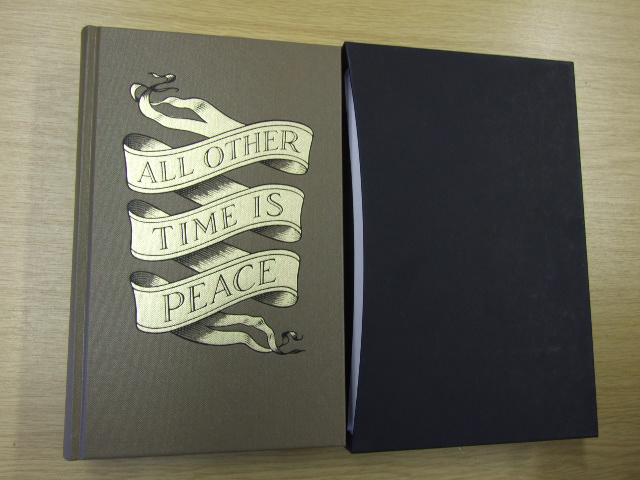
Hobbes, Thomas - Leviathan (Published in by The Folio Society in 2012. Introduced by Alan Ryan. Illustrated by Mike Wilks. Bound in buckram. Blocked with artwork by Neil Gower from a design from Mike Wilks. Set in Arno Pro. Approx. 592 pages. Frontispiece. 12 black & white illustrations. Book size: 10" × 6.25". The philosopher Thomas Hobbes understood the devastation caused by the English Civil War and was determined to construct a blueprint for a peaceful society. He began his task by trying to explain the nature of human beings, the state and civilisation. Morality, he considered, was a physical, not a spiritual attribute, proceeding from our sense of self-preservation. Anarchy decreases our chance of survival and to avoid this, he explains, we must give up a portion of our freedom to a ruling authority, be it a sovereign or Commonwealth (the leviathan of the title). The sovereign's power stems from this self interested agreement: while his subjects cannot overthrow him, he has no divine right. It is no surprise that with such arguments Hobbes made enemies on both sides of the Civil War. The Commonwealth objected to his assertion that benign monarchy was the best form of government, while royalists denounced Hobbes as a revolutionary. Hobbes's conviction that religious power was subordinate to civil authority infuriated Puritans and Catholics alike, both of whom labelled him an atheist. His work was lauded and condemned throughout Europe, and its influence has echoed down the centuries. Published in 1651, Leviathan is the foundation stone on which modern political philosophy is built: the concept of a social contract is drawn from it, while Hobbes's assertion that loss of liberty is a price worth paying for peace has aroused new applications and refutations in every generation. This edition contains a newly commissioned introduction from Alan Ryan, lecturer in politics at Princeton University, placing Hobbes's ideas in context and tracing their influence. Powerful illustrations by Mike Wilks provide a thought-provoking complement to Hobbes's great literary achievement. )