
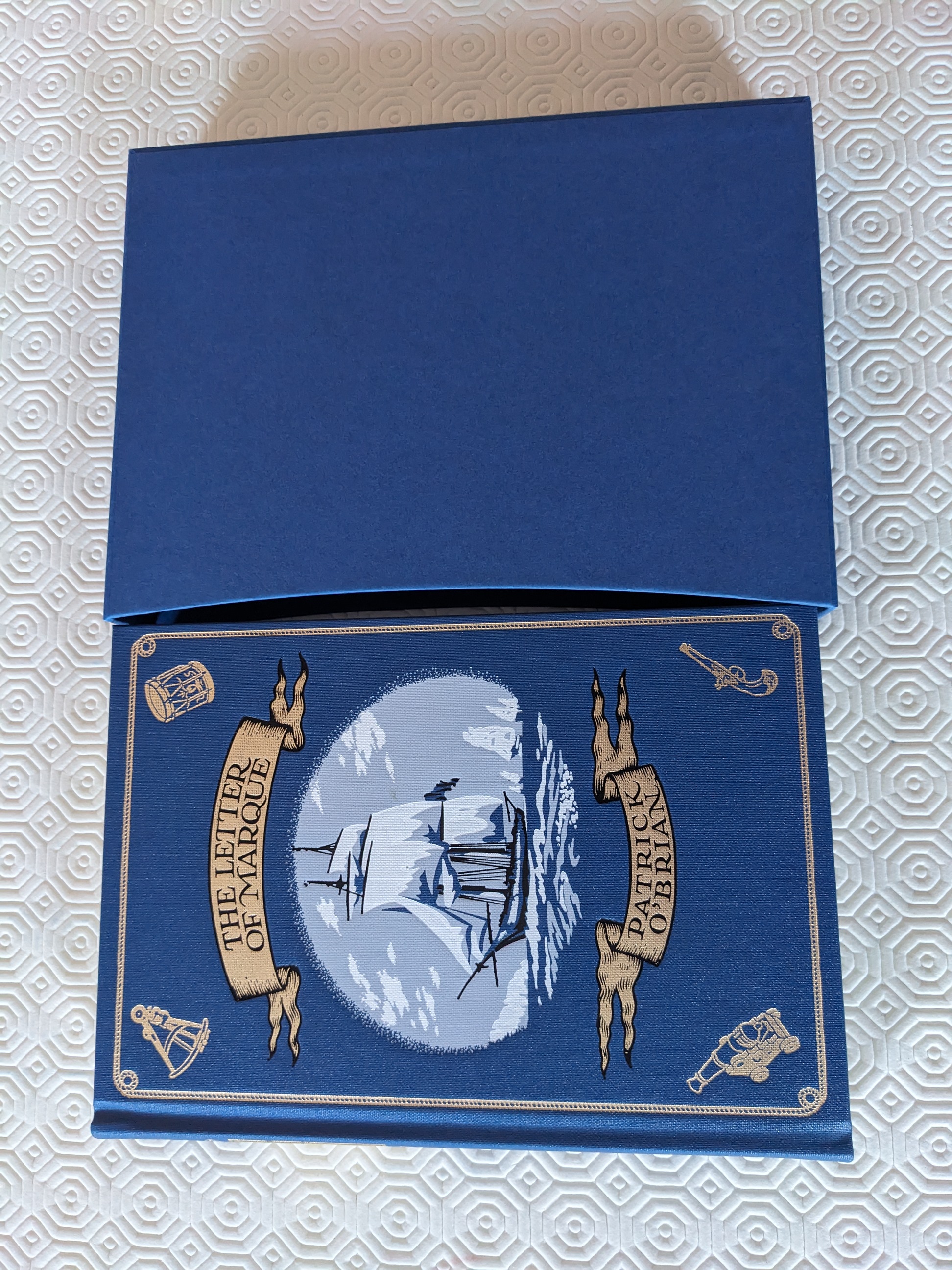
Folio Society Published Works Number 2848
Plato - Symposium Illustrated by Linda Baker-Smith
We buy and sell items like these, so please contact us if you have similar items for sale, and we will make you an offer if we are interested.
To check if we have this item, or similar items, in stock, please click the Check Stock link below. Alternatively, use the links on the left to search our large online database of items for sale, or to visit the rest of the site.
Check Stock
Plato - Symposium Illustrated by Linda Baker-Smith (Published in by The Folio Society in 2015. Illustrated by Linda Baker-Smith. Plato's meditation on love, with a new foreword by A. C. Grayling. The Symposium, Plato's meditation on passionate love, or the Greek eros, is both pivotal to our understanding of his wider philosophy and one of Ancient Greece's greatest and most beautiful literary triumphs. In a lively dialectic, Plato considers love's complex nature, distill- ing the desire for physical love from the love of virtue and goodness, and guiding us to a recognition and appreciation of true Beauty, in its essential and unchanging Platonic Form. As A. C. Grayling explains in his new foreword, we discover that 'love is in essence the desire for all kinds of good there can be – happiness, nobility, moral goodness, beauty itself '. Symposium book. Foreword by A. C. Grayling. Translated by Robin Waterfield. Quarter-bound in cloth with paper sides, printed with a design by Linda Baker-Smith. Set in Centaur. 168 pages. Frontispiece and 7 colour illustrations. 11" x 6.75". An impassioned debate. Although the symposium, or drinking party, is imagined, its attendees are real Athenian socialites, including the poet Agathon, the comic playwright Aristophanes, and Socrates, Plato's revered teacher and mentor. In place of the usual drinking, each symposiast agrees to take turns eulogising Eros, the god of passionate love and sexual lust. With great skill and satisfying realism – at one point the doctor Eryximachus must skip his turn due to a bout of hiccups – the speeches unveil love's many faces. Aristophanes, in perhaps Plato's most celebrated literary achievement, describes how human beings once had double bodies, with two faces and two sets of limbs, and that there were once three human genders – male, female and androgyne. Having been split in two by Zeus, we are compelled to chase our lost other half, a yearning that defines our differing sexualities. With each careful argument, Plato begins to extricate unbridled craving from noble love, and elevate the enriching communion of mutual admiration between two souls. In Socrates' climactic exposition, and the drunken speech of the gate-crashing Alcibiades, the brittle shell of sexual desire is peeled away, and Plato reveals love's ascending route to his unchanging Forms, the only true path to Platonic 'goodness' and perfection. Included in this edition are an introduction and notes by the translator Robin Waterfield. Linda Baker-Smith's fresco-like illustrations show us love in its many guises, while her vibrant binding design depicts a winged Eros. An extract from A. C. Grayling's foreword. In reading the classic philosophical works of the past we take at least two attitudes to them simultaneously. One is that we examine them for the cogency and persuasiveness of their arguments. The other is that we seek in them the seeds of our own thoughts in response. There is much in Plato – even when we recognise the often dissatisfying nature of his views – that nevertheless provokes and inspires: A. N. Whitehead once described philosophy itself as 'footnotes to Plato', not wholly accurate but suggestive anyway, because Plato identified many of the questions central to philosophical endeavour and which are still discussed today. In the case of love, in all its variety and importance to our lives, not much in the Symposium might seem persuasive as an analysis of the phenomenon, but its place in Plato's work gives it a special interest, and serves as a starting point for reflection of our own. Add this to its literary value and historical interest, and it is one of the high points of Plato, and an unmissable read. Plato (c.429–347 bc) has exerted immeasurable influence on the Western philosophical tradition. Born into a wealthy Athenian family, he was a student of Socrates, who was sentenced to death in 399 bc for corrupting the Athenian youth, and who appears as a character in many of Plato's famous dialogues. Plato founded the Academy in Athens, the first Western institute of higher education, where he tutored Aristotle. His works encompass questions of ethics, aesthetics, mathematics and politics; among his many seminal tracts are the Republic, an exploration of possibilities for an ideal government, the Phaedo, part of a cycle depicting the death of Socrates, and the Symposium. From the Folio Society description. )


